
9-Day Russia Border to the Gobi Overland
Day-by-Day Itinerary
Altanbulag Border → Amarbayasgalant Monastery
Once you've crossed the Russia–Mongolia border, we meet you in the town of Altanbulag, opposite Kyakhta on the old Russian side of the tea-caravan route, and drive about 250 km (5 hours on a paved road) to Amarbayasgalant Monastery. Its name means 'Monastery of Tranquil Felicity,' and it is one of the largest and best-preserved Buddhist monasteries in Mongolia. It was built in 1736 by order of the Qing emperor to honor Zanabazar, the first Bogd (spiritual head) of Mongolian Buddhism and a celebrated sculptor whose remains were once kept here. The monastery was sacked in 1937 during the Stalinist purges, but restoration that began in 1988 has gradually returned the symmetrical complex of temples to its former glory. Today it is both an active monastery and a museum, set in a peaceful valley of the Selenge region. Spend the night nearby.
Amarbayasgalant → Uran Extinct Volcano
After breakfast, explore the monastery's courtyards and temples, perhaps catching the morning prayers of its monks. After lunch, drive about 260 km (4 hours on a paved road) to Uran extinct volcano. 'Uran' means 'artistic,' a name the Mongols gave because its perfectly round crater looks like the work of a skilled craftsman. The circular ridge is about 500 m across and holds a small crater lake some 20 m wide and 1.5 m deep. Nearby stand other easily recognizable volcanoes with broken craters, including Tulga, Jalavch, and Togoo, all part of a protected volcanic landscape of forest and grassland. Climb to the top of Uran to look down into the crater and across the surrounding cones, then spend the night in the area.
Uran Volcano → Ugii Lake: Boating & Fishing
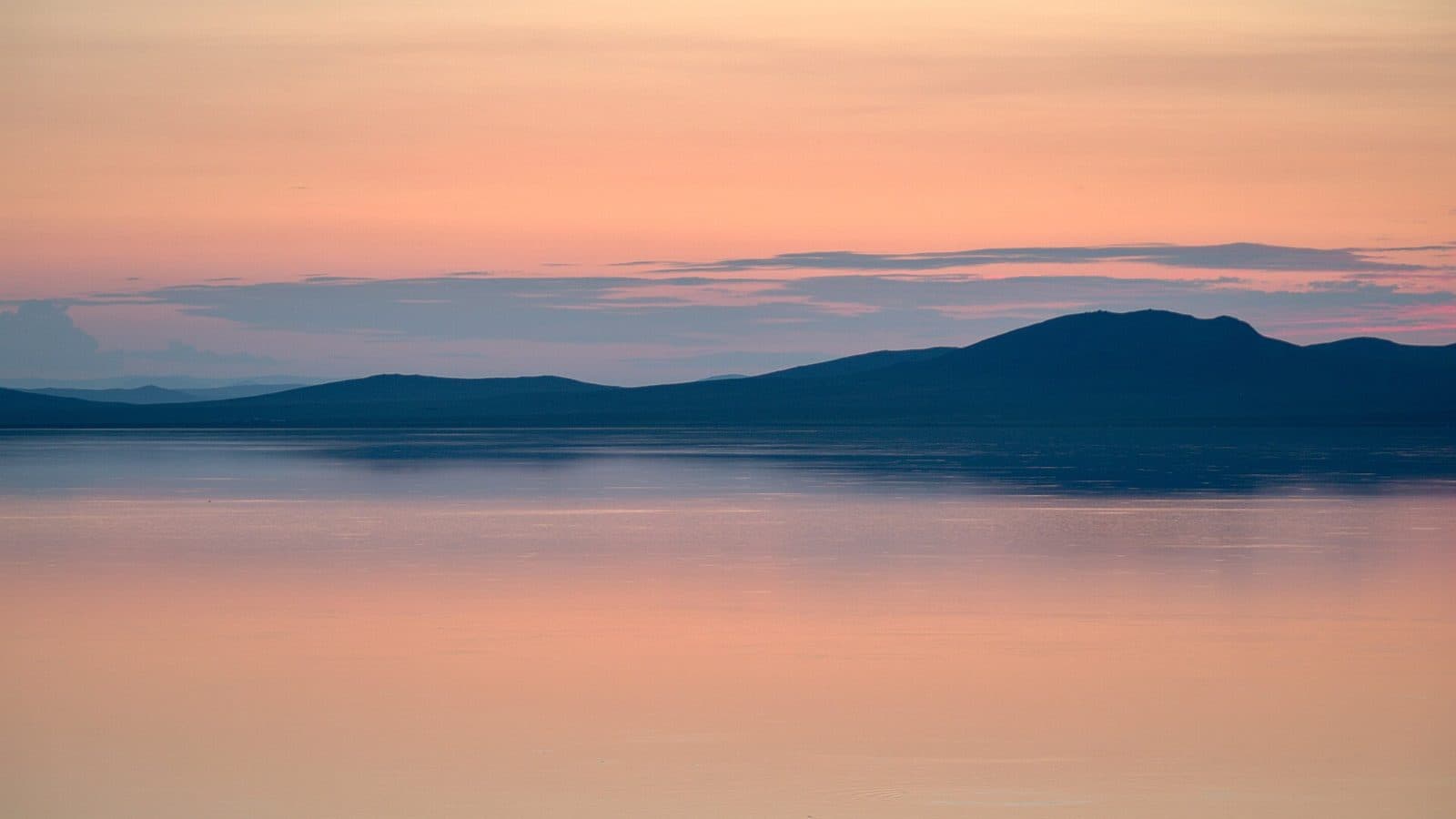
After breakfast, drive about 185 km (5 hours on dirt roads) south to Ugii Lake. This small, picturesque lake is known as a fishers' paradise. It covers only 27 sq km, with an average depth of 6.64 m, a deepest point of over 15 m, and a shoreline of 23 km. Its reed-fringed shallows attract many migratory birds, including cranes, geese, and ducks, and the open steppe around it is home to herding families. In the afternoon, take to the water on a boat and try your hand at fishing, then enjoy a quiet evening by the lake.
Khushuu Tsaidam Monuments → Karakorum (Kharkhorin)
After breakfast, drive about 40 km (1 hour on dirt roads) to the Khushuu Tsaidam Monuments in the Orkhon Valley, two memorial stone installations erected by the Turkic people in the early 8th century and inscribed in the Old Turkic (runic) alphabet, honoring the Turkic khagans Bilge Khagan and his brother Kul Tegin. Visit the local museum, which displays rare and unique exhibits from the site. Then continue about 35 km on a paved road to Karakorum, the capital of the Great Mongol Empire, where a small township stands today. Some two centuries after the city was sacked by Chinese armies, builders reused materials from its ruins to found Erdene Zuu Monastery in 1586, the first Buddhist monastery in Mongolia, ringed by a wall topped with 108 white stupas. Visit Erdene Zuu, the Karakorum Museum, and other historical sights around the town.
Karakorum → Ongi Monastery Ruins
After breakfast, drive about 240 km (5 hours on dirt roads) south into the semi-desert to the ruins of Ongi Monastery on the banks of the Ongi River. Founded in 1760, it was once one of the largest monasteries in the Gobi, until it was destroyed in the communist purges of 1937, and the raw violence of that destruction is still visible across the site today. Hike among the ruins, visit the small local ger museum that displays objects saved from the monastery, and step inside the small, active Buddhist temple that has been rebuilt here.
Ongi → Bayanzag (Flaming Cliffs)
After breakfast, drive about 155 km (4 hours on dirt roads) to Bayanzag. American explorer and zoologist Roy Chapman Andrews named this place the 'Flaming Cliffs' in the 1920s, and many important dinosaur finds, including Protoceratops skeletons and the first dinosaur eggs ever discovered, were made here. The red sandstone cliffs are imposing from a distance and glow especially fiery in the light of the setting sun, while the saxaul shrubs that give Bayanzag its name grow on the plain below. Walk around the site and along the cliff edge, then spend the night nearby.
Bayanzag → Khongor Sand Dunes: Camel Ride & Dune Climb
After breakfast, drive about 150 km (4 hours on dirt roads) to Khongor, the largest sand dune field in the Gobi Desert. The dunes stretch nearly 100 km long and 5 to 10 km wide, with crests rising 80 to 300 m above the surrounding land. On windy days, the moving sand produces a deep booming sound that carries a long way, which is why locals call them the 'Singing Sands.' A green oasis fed by the Khongor River lines their northern edge. Today you ride Bactrian camels to explore these massive dunes, and the energetic can climb one of the crests for an unforgettable view across a sea of golden sand.
Khongor → Yol Gorge → Dalanzadgad
After breakfast, drive about 190 km (5 hours on dirt roads) to Yol Gorge in the Gurvan Saikhan mountain range. 'Yol' means bearded vulture in Mongolian, and the gorge stretches for more than 10 km. At its narrowest point only three or four people can walk side by side, and the high rock walls shade the valley floor from direct sun, so ice formed by its small stream in winter often survives until mid-July. Enjoy an hour's hike through the gorge, watch for ibex and vultures on the cliffs, and visit the small natural history museum at the park entrance. An optional horse ride is possible here. Afterward, drive about 40 km (1 hour on a paved road) to Dalanzadgad, the provincial center of the South Gobi, for the night.
Dalanzadgad → Ulaanbaatar
There are two ways back to Ulaanbaatar today. The included option is to travel with your guide and driver in the same vehicle, about 600 km and 9 hours on a paved road, watching the desert slowly turn back into green steppe. Alternatively, you can take the 1-hour domestic flight from Dalanzadgad to Ulaanbaatar; the flight is not included in the tour price, and domestic airlines allow only 10–15 kg of luggage including carry-on bags. Either way, we transfer you to your accommodation on arrival in the city.