
8-Day China Border to Ulaanbaatar via the Gobi
Day-by-Day Itinerary
Zamyn-Uud Border → Khuvsgul Village (Dornogobi)
Our driver and guide meet you at the border town of Zamyn-Uud, the busy frontier and trade hub of Dornogobi province, where the Trans-Mongolian railway and the road from China's Erlian cross into Mongolia. From here, set off west across the East Gobi on a drive of about 200 km (5 hours on dirt roads) to the small village of Khuvsgul. This is one of the most sparsely populated corners of the country, a vast gravel plain where you may pass only a few herders' gers, camels, and the occasional herd of Mongolian gazelles along the way. It is a gentle introduction to the scale and silence of the desert. Depending on availability, spend the night in a simple local hotel in the village or camp in a tent under the Gobi's famously clear night sky.
Khuvsgul Village → Demchig Monastery
After breakfast, drive about 255 km (7 hours on dirt roads) to Demchig Monastery. The monastery was about a century old when it was destroyed in 1937, during the Stalinist era, and it has since been partly rebuilt. Today the site has some unusual attractions, including a phallic rock formed by nature and Mongolia's tallest stupa, and so-called 'omniscients' say the place radiates huge energy. About 15 km from the monastery lies the 'cave of wealth': locals believe that if you rub your cash against its walls, your money will grow. Explore the temple and the other interesting sites around it, and perhaps try your luck in the cave. Spend the night in a local hotel.
Demchig Monastery → Yol Gorge
After breakfast, set off on the longest drive of the trip, about 310 km and 8 hours on a mix of dirt and paved roads, to Yol Gorge in the Gurvan Saikhan mountain range. 'Yol' means bearded vulture in Mongolian, and the gorge stretches for more than 10 km. At its narrowest point only three or four people can walk side by side, and the high rock walls shade the valley floor from direct sun, so ice formed by its small stream in winter often survives until mid-July. Enjoy an hour's hike through the gorge, keep watch for ibex and vultures on the cliffs, and visit the small natural history museum at the park entrance, with its displays of local wildlife and dinosaur finds. Spend the night nearby.
Yol Gorge → Khongor Sand Dunes: Camel Ride
After breakfast, drive about 190 km (5 hours on dirt roads) to Khongor, the largest sand dune field in the Gobi Desert. The dunes stretch nearly 100 km long and 5 to 10 km wide, with crests rising 80 to 300 m above the surrounding land. On windy days, the moving sand produces a deep booming sound that carries a long way, which is why locals call them the 'Singing Sands.' A green oasis fed by the Khongor River lines their northern edge. Today you ride Bactrian camels to explore these massive dunes, and the energetic can climb one of the crests for an unforgettable view across a sea of golden sand. Spend the night near the dunes.
Khongor → Bayanzag (Flaming Cliffs)
After breakfast, drive about 150 km (4 hours on dirt roads) to Bayanzag. American explorer and zoologist Roy Chapman Andrews named this place the 'Flaming Cliffs' in the 1920s, and many important dinosaur finds were made here, including Protoceratops skeletons and the first dinosaur eggs ever discovered. The eroded red sandstone cliffs are imposing from a distance, and they glow especially fiery in the light of the setting sun, while the plain around them is dotted with hardy saxaul shrubs. Walk around the site and along the cliff edge, then spend the night nearby.
Bayanzag → Ongi Monastery Ruins
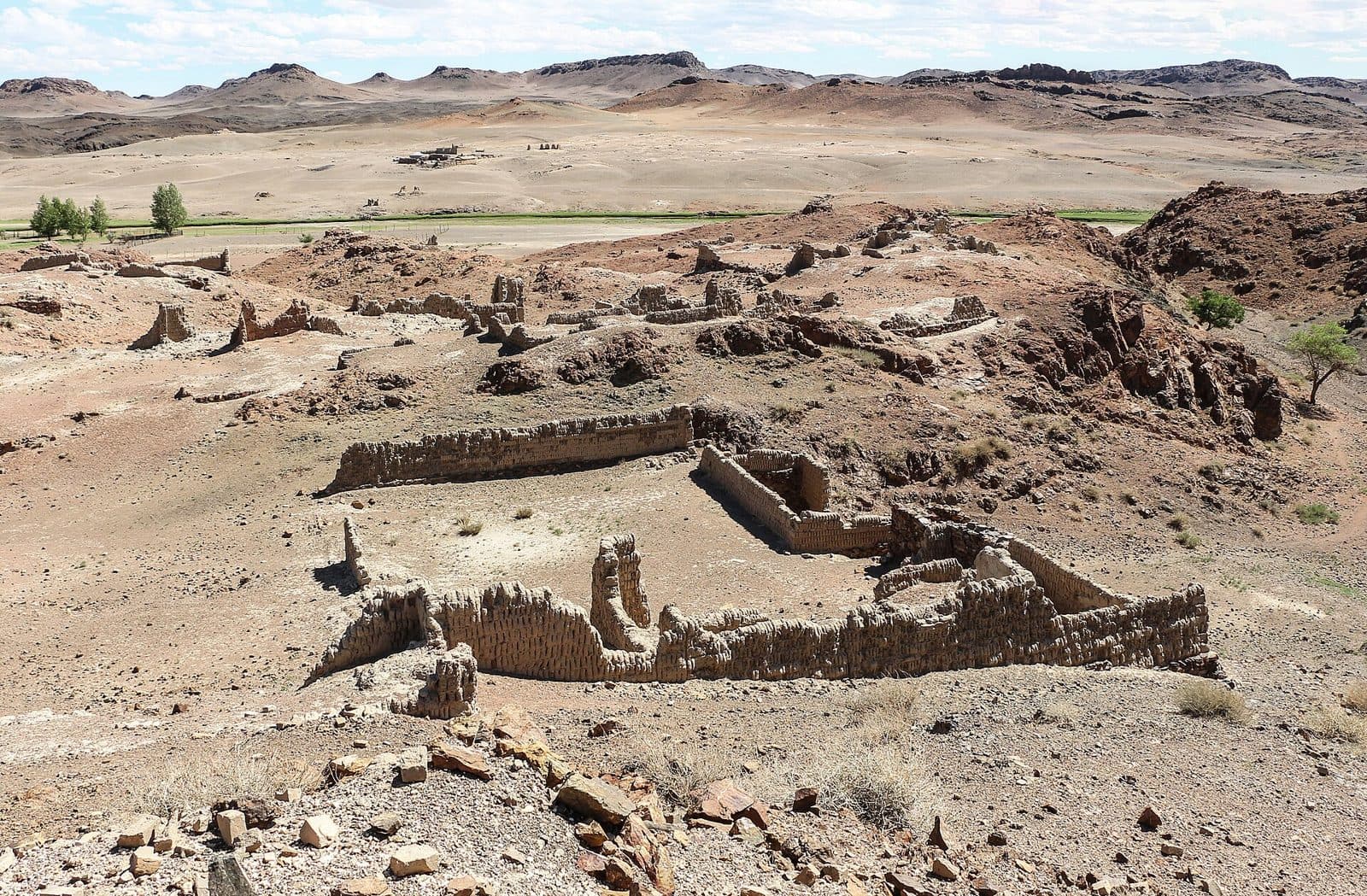
After breakfast, drive about 155 km (4 hours on dirt roads) north to the ruins of Ongi Monastery on the banks of the Ongi River. Founded in 1760, it was once one of the largest monasteries in the Gobi, with temple complexes on both sides of the river, until it was destroyed in the communist purges of 1937. The raw violence of that destruction is still visible across the site today. Hike among the ruins, visit the small local ger museum displaying objects that survived the destruction, and step inside the small, lovely, and active Buddhist temple that has been rebuilt here. In the evening, stroll along the river, a ribbon of green in the dry steppe.
Ongi → Nomadic Family → Karakorum (Kharkhorin)
After breakfast, drive about 200 km (5 hours on dirt roads) to visit a nomadic family. Enjoy the warm, joyful atmosphere of their ger, and learn their clever way of life by joining in whatever daily tasks are underway, just like a nomad. Then drive about 40 km (1 hour, mostly on a paved road) to Karakorum, the capital of the Great Mongol Empire, where a small township stands today. Around two centuries after the city was sacked by Chinese armies, builders reused materials from its ruins to found Erdene Zuu Monastery in 1586, the first Buddhist monastery in Mongolia, enclosed by a wall topped with 108 white stupas. Visit Erdene Zuu, the Karakorum Museum, and the other historical sights around the town, including the stone turtle that once guarded the old capital. Spend the night in Karakorum.
Karakorum → Ulaanbaatar
After breakfast, drive back to Ulaanbaatar, about 360 km and 6 hours on a paved road across the rolling grasslands of Central Mongolia, a good chance to watch the herds and look through your photos. On arrival in the city at around 15:00, we transfer you to your accommodation, and the trip ends.