
6-Day East Gobi Wilderness: Fossils & Argali
Day-by-Day Itinerary
Ulaanbaatar → Sainshand: Danzanravjaa Museum
We pick you up from your accommodation at 08:00 and drive southeast to Sainshand, about 465 km and 7 hours on a paved road, watching the grassy steppe fade into the gravel plains of the East Gobi. Sainshand, the capital of Dornogobi province, is the largest settlement in the East Gobi. Here you visit the Danzanravjaa Museum, dedicated to Mongolia's most revered and multi-talented monk. Danzanravjaa (1803–1856), the Fifth Noble Gobi Lord, was a poet, playwright, composer, painter, and teacher, and the treasures shown here, from his costumes and stage props to religious artworks, spent decades buried in the desert to hide them from the communist purges before they were recovered. Then drive about 15 km on a paved road to your tourist ger camp for the night.
Khamar Monastery: World Energy Center & Khusliin Khar Mountain
After breakfast, drive about 35 km on a paved road to Khamar Monastery. It was founded in 1820 by the educator, poet, and noble monk Danzanravjaa, who chose the site believing that the surrounding land radiated a spiritual energy fostered by the Gobi; today many Mongolians come here to recharge at the spot known as the 'world energy center.' The monastery was completely destroyed in the communist purges of 1937, and rebuilding began in the 1990s with great success. See the 108 meditation caves where monks once retreated, a dinosaur skeleton lying in the ground, and petrified trees, then hike around the area and enjoy the small sand dunes nearby. Next, drive about 25 km on a dirt road to Khusliin Khar Mountain, believed to make people's dreams come true. Climb to the top for a spectacular view over the desert, then drive about 25 km (mostly on a paved road) back to your tourist ger camp.
Sainshand → Ulgii Monastery Ruins → Suikhent Petrified Forest
After breakfast, set off on a long drive of about 270 km (7 hours on dirt roads) deep into the empty desert to the ruins of Ulgii Monastery. Founded in 1745, it was once one of the largest monasteries in the Gobi, home to more than 1,000 monks, until it was destroyed in the communist purges of 1937. The violence of that destruction is still visible and palpable across the site today. After lunch, take an hour's walk around the ruins. Then drive about 15 km on a dirt road to Suikhent Mountain, home to a forest of petrified trees turned to stone over many millions of years and protected since 1996. Some of these impressive fossil trunks are up to 20 m long, with diameters reaching 2 m. Before dinner, explore the petrified trees and climb to the top of the mountain. Tonight you camp in tents and enjoy a fresh dinner cooked over a small campfire under the desert stars.
Suikhent → Shar Tsav Dinosaur Footprints
After breakfast, drive about 50 km (2 hours on dirt roads) to Shar Tsav, one of the most remarkable dinosaur track sites in the Gobi. Its rocky surface preserves numerous fossil footprints made when the area was the shore of a prehistoric sea or lake, in the Late Cretaceous period. Standing here, you can imagine walking along that ancient shoreline among dozens of dinosaurs that came looking for a bite to eat from whatever had washed up on the last high tide. After lunch, explore the site at leisure; a walkway and pavilion make the footprints easy to see. With so short a drive, there's plenty of time to enjoy the silence and space of the desert. Spend another night camping in tents.
Shar Tsav → Ikh Nart Nature Reserve
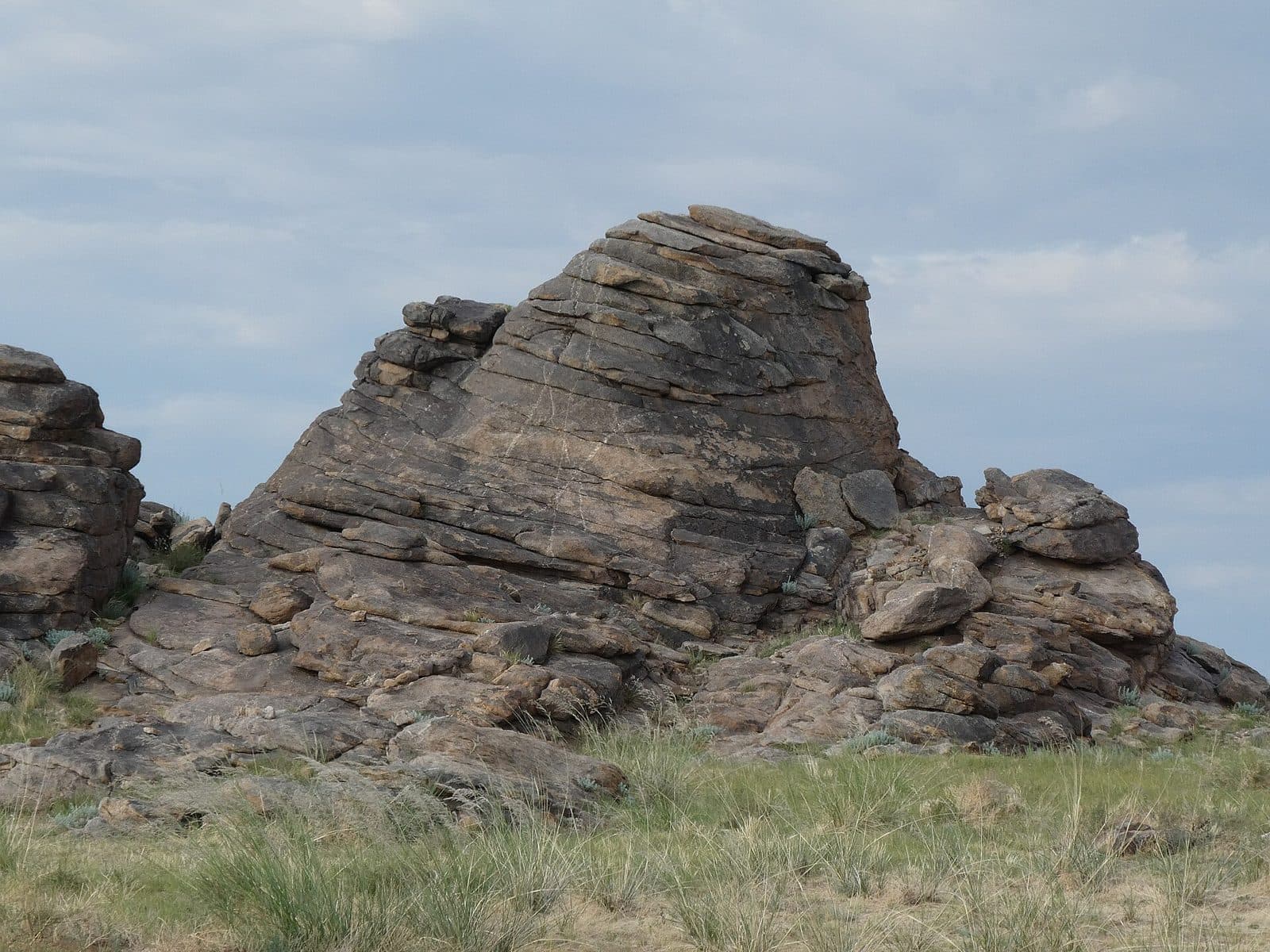
After breakfast, drive about 320 km (8 hours on dirt roads) to Ikh Nart Nature Reserve, the longest day of the trip. Ikh Nart is a cluster of rocky hills and small mountains rising from the semi-desert steppe, and since it sees few tourists you'll find its nature wonderfully unspoiled. Over millennia, wind and weather have worn the granite into domes, weird shapes, craggy ridges, and a mind-boggling range of textures. It's a favorite with wildlife enthusiasts: the reserve harbors one of the largest populations of argali, the world's biggest wild sheep, along with Siberian ibex, and vultures and other birds of prey nest on its cliffs. Spend the night camping in tents among the rocks.
Ikh Nart: Argali Hike → Ulaanbaatar
After breakfast, set out on a hike around two springs, Khalzan Mountain, and Burgasan Am in search of argali wild sheep. Early morning is often the best time to spot them, as they come down to graze and drink before retreating to the higher rocks, so keep your binoculars handy and scan the ridgelines. After lunch, drive back to Ulaanbaatar, about 330 km and 5 hours on a paved road. On arrival in the city at around 19:00, we take you to your accommodation and the trip comes to an end.