
8-Day Gobi & Karakorum Ending at Naadam
Day-by-Day Itinerary
Ulaanbaatar → Tsagaan Suvarga
We pick you up from your accommodation at 08:00 and drive south to Tsagaan Suvarga, about 470 km and 6 hours on a paved road. Along the way, the green steppe gradually gives way to the open plains of the Middle Gobi. Tsagaan Suvarga ('White Stupa') is a sheer escarpment that was once the floor of an ancient sea. Its layered sediments, laid down over millions of years, show as bands of white, pink, orange, and red, each color marking a different age. The cliffs rise more than 50 m at their highest point and run for some 400 m, looking like the ruins of an ancient ghost city from a distance. It makes a natural resting point on the road from the Middle Gobi to the South Gobi. Take a hike around the site in the evening light, then spend the night nearby.
Tsagaan Suvarga → Yol Gorge
After breakfast, drive about 200 km (3 hours on a paved road) to Yol Gorge in the Gurvan Saikhan mountain range. 'Yol' means bearded vulture in Mongolian, and the gorge stretches for more than 10 km. At its narrowest point only three or four people can walk side by side, and the high rock walls shade the valley floor from direct sun, so ice formed by its small stream in winter often survives until mid-July. Since this tour visits in early July, there's a good chance you'll still see it. Enjoy an hour's hike through the gorge, watch for ibex and vultures on the cliffs, and visit the small natural history museum at the park entrance before spending the night nearby.
Yol Gorge → Khongor Sand Dunes: Camel Ride
After breakfast, drive about 190 km (5 hours on dirt roads) to Khongor, the largest sand dune field in the Gobi Desert. The dunes stretch nearly 100 km long and 5 to 10 km wide, with crests rising 80 to 300 m above the surrounding land. On windy days, the moving sand produces a deep booming sound that carries a long way, which is why locals call them the 'Singing Sands.' A green oasis fed by the Khongor River lines their northern edge. Today you ride Bactrian camels to explore these massive dunes, and the energetic can climb one of the crests for an unforgettable view across a sea of golden sand.
Khongor → Bayanzag (Flaming Cliffs)
After breakfast, drive about 150 km (4 hours on dirt roads) to Bayanzag. American explorer Roy Chapman Andrews named this place the 'Flaming Cliffs' in the 1920s, and many important dinosaur finds, including Protoceratops skeletons and the first dinosaur eggs ever discovered, were made here. The soft red sandstone was laid down in the Late Cretaceous, some 70 to 80 million years ago, and the wind still exposes fossils in it today. The cliffs are imposing from a distance and glow especially fiery in the light of the setting sun. Walk around the site, then spend the night nearby.
Bayanzag → Ongi Monastery Ruins
After breakfast, drive about 155 km (4 hours on dirt roads) north to the ruins of Ongi Monastery on the banks of the Ongi River. Founded in 1760, it was once one of the largest monasteries in the Gobi, until it was destroyed in the communist purges of 1937, and the raw violence of that destruction is still visible across the site today. Hike among the ruins, visit the small local ger museum displaying objects saved from the monastery, and step inside the small, active Buddhist temple that has been rebuilt here. Spend the night nearby, close to the river.
Ongi → Nomadic Family → Karakorum (Kharkhorin)
After breakfast, drive about 200 km (5 hours on dirt roads) to a nomadic herding family. Enjoy their joyful hospitality and learn the clever ways of nomadic life by taking every chance to join in their daily tasks, just like a nomad. Then continue 40 km (1 hour, mostly on a paved road) to Karakorum, the capital of the Great Mongol Empire, where a small township stands today. After the city was sacked, builders reused materials from its ruins to found Erdene Zuu Monastery in 1586, the first Buddhist monastery in Mongolia, ringed by a wall topped with 108 white stupas. Visit Erdene Zuu, the Karakorum Museum, and the other historical sights around the town, such as the ancient stone turtle that once marked the city's boundary.
Karakorum → Naadam Horse Racing at Khui Doloon Khudag → Ulaanbaatar
After breakfast, drive about 325 km (5 hours on a paved road) east to Khui Doloon Khudag, the wide open steppe valley outside Ulaanbaatar where the national Naadam horse races are held. Horse racing is the Mongols' favorite event of the festival: jockeys, most of them children, ride bareback or on light saddles across 10 to 30 km of open steppe, depending on the age of the horses, while families cheer from the finish line and the winning horses are honored with songs and airag (fermented mare's milk). Soak up the atmosphere among the crowds, food stalls, and gers. Before dinner, drive about 35 km on a paved road back to Ulaanbaatar, where we drop you off at your accommodation. Tonight's hotel is not included in the tour price.
Naadam Festival: Opening Ceremony, Wrestling & Archery
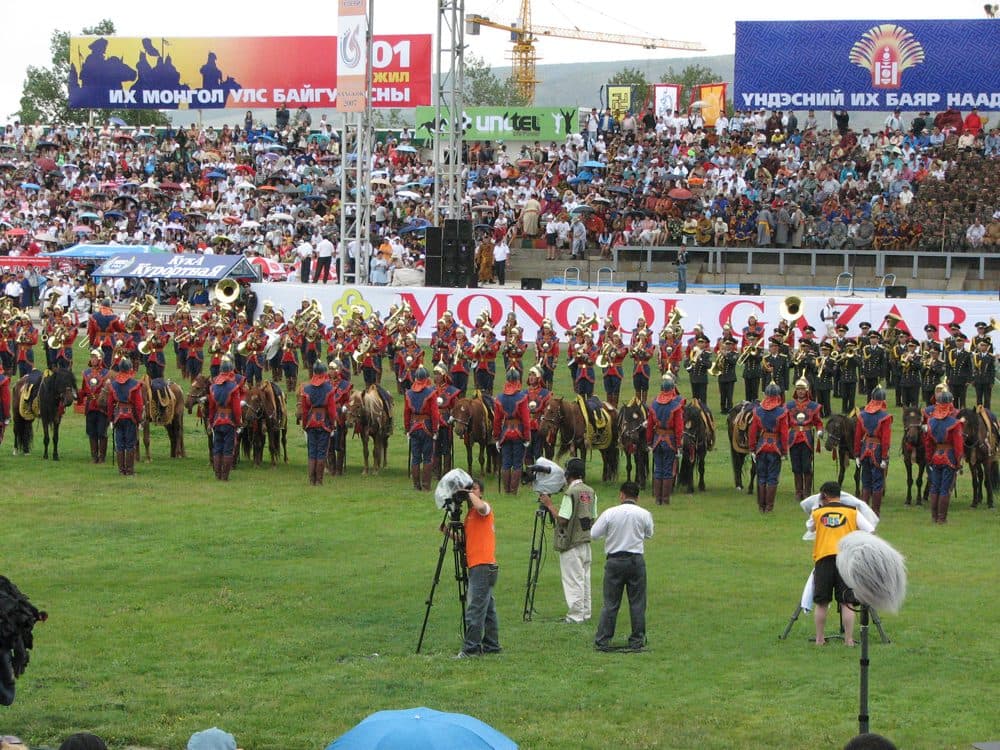
We pick you up from your accommodation (the time is confirmed nearer the date) and head to the Central (National) Stadium, where the opening ceremony of Naadam is held every year, a colorful spectacle of music, dance, and riders in the costumes of the old Mongol army, followed by the first rounds of wrestling. Hundreds of wrestlers in traditional boots and open-fronted jackets compete in a knockout contest with no weight classes, and each round begins with the wrestlers' slow eagle dance. Lunch today is the festival classic, Naadam khuushuur, a fried pastry stuffed with minced mutton that every Mongolian considers a must-eat at Naadam. After lunch, visit the archery ground next to the main stadium, where archers in traditional dress shoot at targets of small leather rings, then enjoy some free time to stroll around the festival grounds. Before dinner, we transfer you back to your accommodation; the tour ends at around 18:00.