
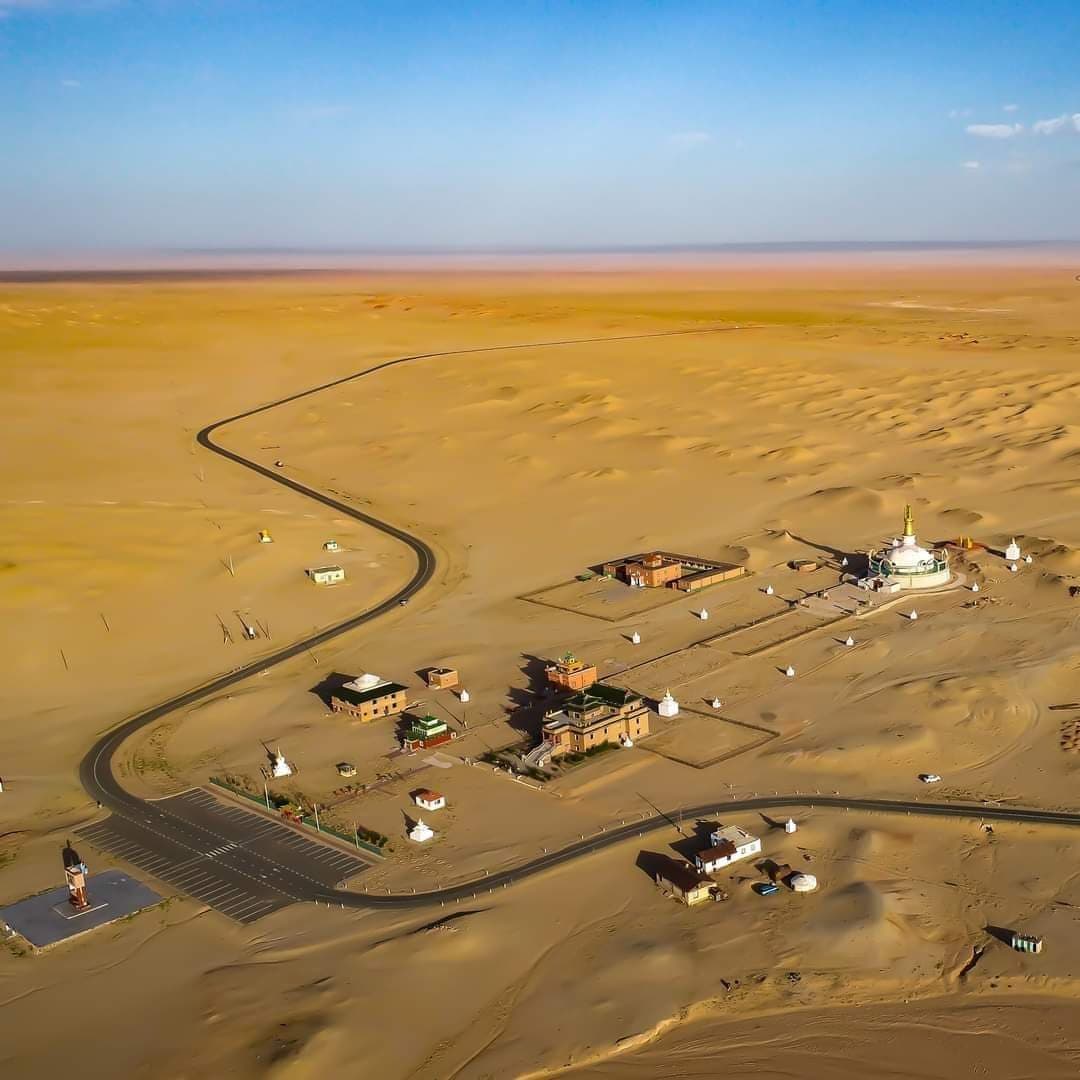
5-Day East Gobi by Car: Shambala & Choir Bogd
Day-by-Day Itinerary
Ulaanbaatar → Sainshand
We pick you up from your accommodation at 09:00 and drive southeast to Sainshand, the capital of Dornogobi province, about 460 km and 7 hours on a paved road. The route follows the line of the Trans-Mongolian Railway across the steppe, and as the hours pass, the grassland grows thinner and the land opens into the wide, pale plains of the East Gobi. Sainshand, whose name means 'Good Spring,' is a quiet railway town and the gateway to Khamar Monastery and the sacred sites linked to the lama Danzanravjaa. Arrive in the late afternoon and settle in for the night.
Khamar Monastery & the Energy Center
After breakfast, drive about 35 km on a paved road to the Khamar Monastery complex. The monastery was founded in 1820 by Danzanravjaa, the educator, poet, and noble monk who chose this site believing that the surrounding land radiated a spiritual energy fostered by the Gobi. He also staged his famous opera 'The Story of the Moon Cuckoo' here, one of the earliest theatrical works in Mongolia. The monastery was completely destroyed in the communist purges of 1937, but rebuilding began in 1992 and has been a great success. Today you visit the 108 caves where monks once meditated in seclusion, see dinosaur skeleton remains on the ground and petrified trees from the Jurassic period, and walk to the energy center, where pilgrims come to absorb the land's power. Hike around the area and enjoy the small sand dunes nearby before returning for the night.
Khusliin Khar Mountain → Sainshand: Danzanravjaa Museum
After breakfast, drive about 25 km on dirt roads to Khusliin Khar Mountain, which local people believe can make dreams come true. Climb to the top, where the view across the endless East Gobi plains is spectacular, and take a quiet moment to make your own wish. Then drive about 35 km on a paved road back to Sainshand to visit the Danzanravjaa Museum. Its exhibits are the hidden treasures of Mongolia's most revered and multi-talented monk, which spent decades buried in the desert to save them from destruction during the purges before being recovered and put on display. Among them are religious artifacts, costumes, and objects linked to his poetry, music, and theater. Spend the night in or near Sainshand.
Sainshand → Choir Bogd Mountain
After breakfast, drive about 220 km (3 hours on a paved road) to Choir Bogd Mountain, then about 10 km on dirt roads to Tsoorkhoi Spring. Its water is icy cold in summer yet never freezes in winter, and locals have long drunk it for the good of their internal organs. Continue 10 km on dirt roads to the White Tara, a goddess figure 245 cm high and 170 cm wide carved into the granite at the site of the Tsogchin hall of East Choir Monastery. In 1828, when typhus spread around Choir Monastery and killed monks and laypeople alike, local people carved this Goddess of Longevity to stop the disease, and it is said there was no more fever afterward. Then explore Choir Bogd Mountain itself, seeing the Single Monk Cave and the Child Ovoo, and hiking among its weathered rocks. Visit the camel caravan statues, which mark the Tea Road from Beijing to Da Khuree (old Ulaanbaatar), once a vital artery connecting Asia and Europe. Finally, drive 20 km on a paved road to the camp and visit its small ethnographic museum of treasures from East Choir Monastery's monks.
Choir → Ulaanbaatar
After breakfast, drive back to Ulaanbaatar, about 230 km and 3 hours on a paved road, as the semi-desert of Govisumber gives way once more to the grassy hills around the capital. It's a short final drive, leaving you the afternoon free in the city. We drop you off at your accommodation at around 13:00, and the tour ends.