
6-Day Hot Springs to Khuvsgul, Fly Back
Day-by-Day Itinerary
Ulaanbaatar → Khustai National Park → Elsen Tasarkhai
We pick you up from your accommodation at 08:00 and drive about 100 km (2 hours on a paved road) to Khustai National Park, where takhi wild horses have been reintroduced since 1992. Known in the West as Przewalski's horse, the takhi is the last wild horse subspecies to survive into the 21st century; Russian explorer N. M. Przhevalsky first described it in western Mongolia in the late 1870s. Spend time hiking in the surrounding hills to find the wild horses, and with luck you may also spot maral (red deer) and other animals. Then drive about 225 km (4 hours on a paved road) to Elsen Tasarkhai, whose name means 'piece of sand.' Considered the northern edge of the Gobi, this strip of small dunes lies in the lowland between the legendary Khugnu Khaan and Bat Khaan mountains. On arrival, have dinner in a nomadic family's ger and learn about herding life by joining in their daily tasks. Then ride two-humped Bactrian camels for an hour: they walk slowly and gently, and you sit comfortably supported between the humps. Spend the night here.
Elsen Tasarkhai → Karakorum → Tsenkher Hot Springs
After breakfast, drive about 75 km (1 hour on a paved road) to Karakorum, once the capital of the Great Mongol Empire, where a small township stands today. Some 200 years after the city was sacked by Chinese armies, builders reused materials from its ruins to found Erdene Zuu Monastery in 1586, the first Buddhist monastery in Mongolia, ringed by a wall topped with 108 white stupas. Visit Erdene Zuu, the Karakorum Museum, and other interesting historical sights around the town, such as the ancient stone turtle that once marked the city's boundary. Then drive about 125 km (2 hours on a paved road) to Tsenkher Hot Springs, the most famous hot spring in Mongolia and one of Central Mongolia's most popular attractions. Its mineral-rich water rises at a perfect 36–40°C. It can be busy in high season, but tonight you stay at a tourist ger camp with its own open-air hot spring pool, so you can soak through the evening.
Tsenkher → Khorgo-Terkh National Park
After breakfast, drive about 215 km (4 hours on a paved road) to Khorgo-Terkh National Park. Khorgo volcano erupted in the Quaternary Period, and its lava dammed a river to create a truly remarkable landscape: the extinct Khorgo crater beside Terkhiin Tsagaan Lake, a large, placid lake ringed by sandy beaches. Around them lie small and large gorges, including Shar Nokhoin Tam and the Solo Person's Cave, 13 complete and partly formed volcanoes, and rock formations cut by fast-flowing rivers and cascades. Climb to the rim of Khorgo volcano for a superb panoramic view, then walk among the gorges and lava formations. Spend the night in the park.
Khorgo-Terkh → Shine-Ider
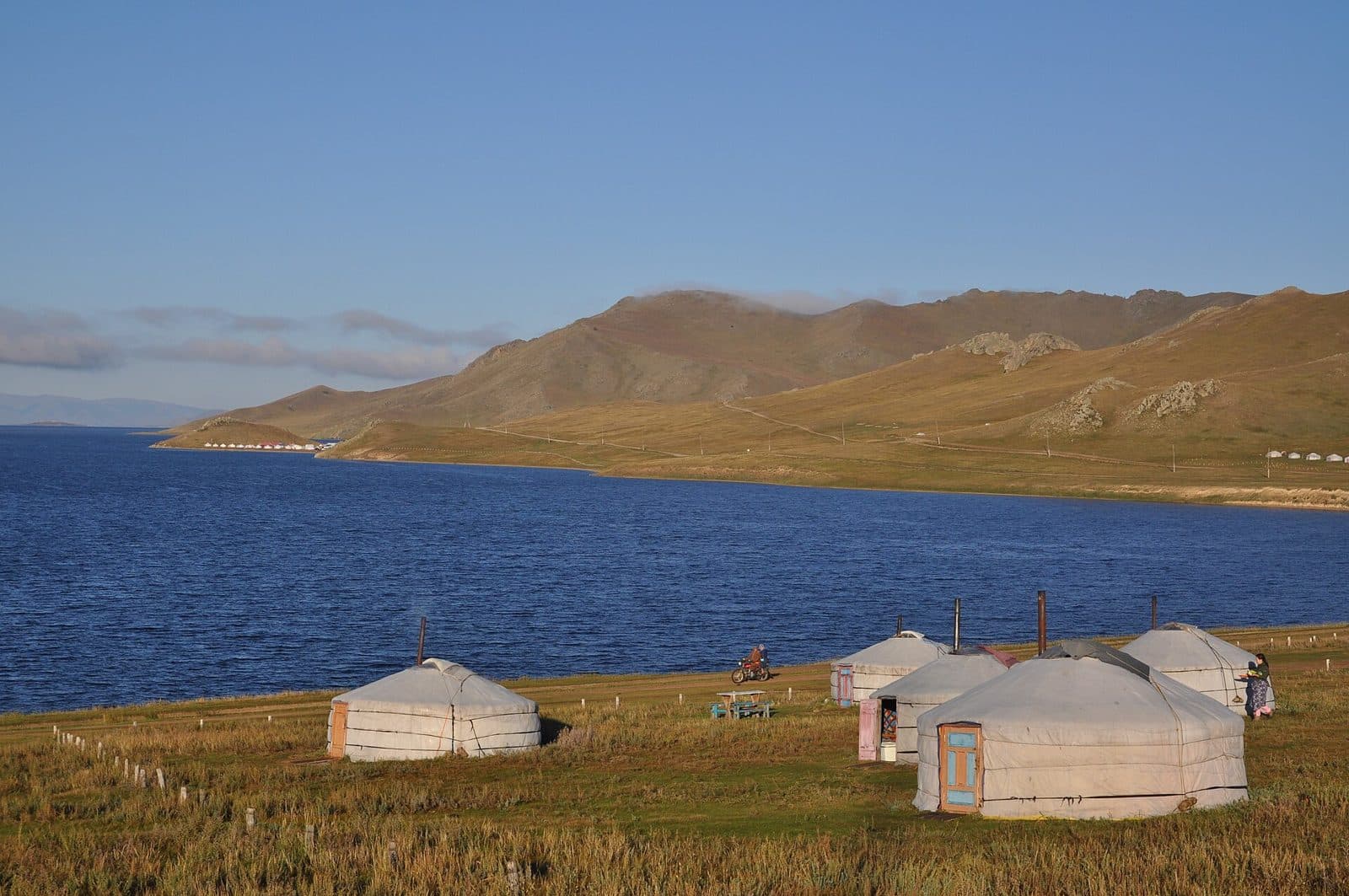
After breakfast, drive about 170 km (6 hours on dirt roads) north to Shine-Ider district in Khuvsgul Province. The day is spent on the road, crossing the high, picturesque Orookh Mountain Pass as the open grasslands of Central Mongolia give way to the larch-covered mountains of the north. It's a good day to watch the scenery change and enjoy the herds of horses, yaks, and sheep grazing along the way. Spend the night in a tourist ger camp.
Shine-Ider → Lake Khuvsgul: Horse Ride & Reindeer Herders
After breakfast, drive about 230 km (6 hours, mostly on a paved road) to Lake Khuvsgul. Lying about midway along the border between Mongolia and Russian Siberia, in a gigantic stone bowl nearly 110 km long and almost 40 km wide, it holds around 3% of all the fresh water on Earth, and its clear blue water and forested shores have earned it the name 'Blue Pearl of Asia.' Here you set out on horseback for a 2-hour ride along the shore and up the mountain to a viewpoint; no riding experience is required. Then visit the reindeer people, Tuvan (Dukha) herders whose families moved from the Tuva Republic into the northernmost corner of Mongolia around the 1920s. Some have come down to the lake with their reindeer to sell handmade souvenirs to visitors. Spend the night on the lakeshore.
Uushig Deer Stones → Murun → Fly to Ulaanbaatar
After breakfast, drive about 145 km (3 hours, mostly on a paved road) to the Uushig deer stones. This complex of about 30 deer stones and burial mounds in the Uushig Valley is more than 3,000 years old. Carved from long blocks of granite with stylized flying deer, the stones bring together the Bronze Age funeral practices, sacrificial rituals, beliefs, and 'animal style' art shared by the ancient nomads of the steppe. Then drive about 15 km on a dirt road to Murun airport and take the 1-hour flight back to Ulaanbaatar. After you land, our driver meets you and takes you to your accommodation. The end time depends on the flight schedule, usually in the afternoon.