
First-Timer's Guide to the Gobi Desert: What to Actually Expect
Say 'Gobi Desert' to most people and they picture a single unbroken ocean of sand, something out of a movie set. The truth is more interesting, and honestly more useful to know before you go: only a small fraction of the Gobi is covered in dunes at all. Most of it is rocky steppe, dry grassland, and low mountains, punctuated by dramatic geological formations that don't look like each other at all.
That's not a disappointment. It's the opposite. In a single week you can go from white limestone cliffs that look like a ruined city, to a narrow gorge with ice at the bottom in summer, to genuine towering dunes, to blood-red cliffs where the first dinosaur eggs ever found by science were sitting in the open ground. Here's what that actually looks and feels like.
It's Not All Sand: The Gobi's Different Faces
Tsagaan Suvarga, the White Stupa, is usually the first big stop heading south from Ulaanbaatar, and it sets the tone for how varied this landscape is. It's a limestone escarpment carved by an ancient inland sea, striped in white, pink, and rust red, and it looks nothing like a desert cliché.
A day or two later you'll likely hit Yol Gorge, tucked into the Gurvan Saikhan mountains. This one genuinely surprises first-timers: it's a narrow canyon that holds ice at its base well into July in a good year, a strange and cool pocket in the middle of what's supposed to be one of Asia's driest regions.
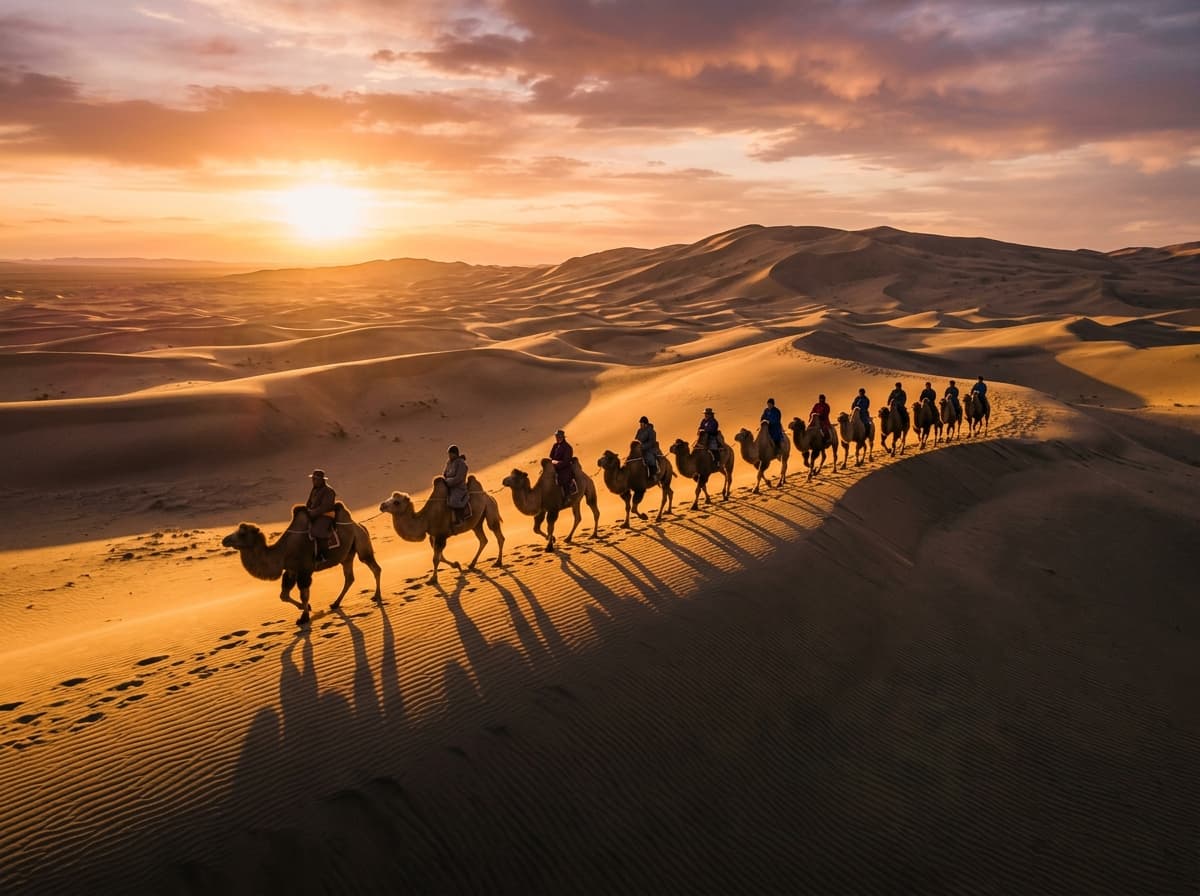
Then come the Khongor Sand Dunes, the closest thing to the postcard image, rising up to 300 meters and stretching for roughly 100 kilometers. This is where you'll get your camel ride, and where the sand genuinely hums under your feet if the wind and dryness line up (locals call them the 'singing dunes').
Last stop for most itineraries is Bayanzag, the Flaming Cliffs, a stretch of red sandstone where American paleontologist Roy Chapman Andrews's expedition found the first fossilized dinosaur eggs ever documented, back in the 1920s. The cliffs really do glow orange-red at sunset, and it's not unusual to spot fossil fragments still sitting in the eroding rock.
Sleeping in a Ger Camp: What It's Actually Like
Most Gobi trips overnight in tourist ger camps, which are more comfortable than the word 'camping' suggests. You're sleeping in a proper felt-walled ger with real beds, not a tent on the ground, and the camps we work with cook fresh meals on-site rather than serving anything pre-packaged. Bathrooms are typically a shared washroom block a short walk from your ger rather than an en-suite, which surprises some first-timers, so it helps to know that going in.
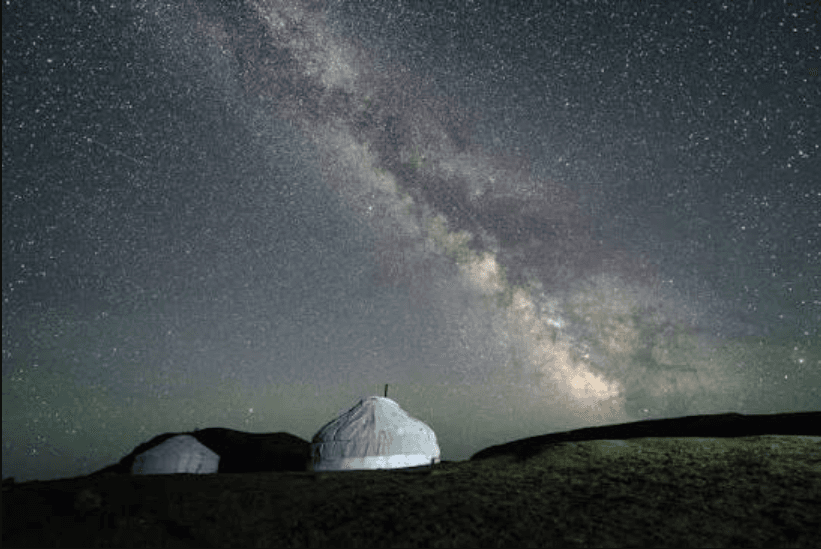
Evenings are genuinely one of the highlights. Once the sun goes down and the generator (if there is one) switches off, the darkness in the Gobi is close to absolute, and the stars are the kind of dense, layered field of light that most people have never actually seen. Bring a headlamp, and give yourself ten minutes outside for your eyes to adjust before you decide the sky isn't that impressive.
The Roads, or the Lack of Them
Outside the Gobi's few paved highways, you're mostly driving on hard-packed dirt tracks, sometimes several tracks running roughly parallel where drivers have gone around a rough patch and a new route formed. This is normal, not a sign you're lost, and it's exactly why a good local driver matters more here than almost anywhere else you'll travel. Distances that look short on a map can take three or four hours, so itineraries are built around driving time, not straight-line kilometers.
Packing for the Swing
The single biggest adjustment for first-time Gobi travelers is the temperature swing. A summer afternoon can hit 35 Celsius in direct sun, and the same night can drop into single digits once the desert loses its heat. Layers matter more than any individual piece of gear: a warm fleece or light down layer for the evening, a windproof and dust-proof outer shell, and a buff or scarf for the dune sections where wind-blown sand gets into everything. Sunscreen and a proper hat are not optional. There is essentially no shade for most of the day.
Ready to See It Yourself
Every one of these landscapes, the White Stupa, Yol Gorge, the Khongor dunes, and Bayanzag, is part of our Gobi Desert Highlights route, and they also open our longer 14-Day Classic Mongolia Expedition, which continues on into Central Mongolia and up to Lake Khuvsgul afterward. Either way, going in knowing the Gobi is a landscape of contrasts rather than one long stretch of sand will change how you experience it.
Tours You Might Like
Gobi Desert Highlights & Central Mongolia
Chasing sand dunes, dinosaur fossils & camel-back sunsets
Venture into the heart of the Gobi. Ride two-humped camels, climb the whistling sand dunes, and gaze at the endless starlight.
14-Day Classic Mongolia Expedition
From the Gobi Desert to the Siberian Taiga
A comprehensive 14-day odyssey across Mongolia's most dramatic landscapes: from the ancient seafloor cliffs and singing sand dunes of the Gobi Desert, through the ruins of the Mongol Empire and volcanic lakes of Central Mongolia, to the crystal waters of Lake Khuvsgul and the reindeer camps of the Tsaatan in the Siberian taiga.